// THE PREMISE
What this world is
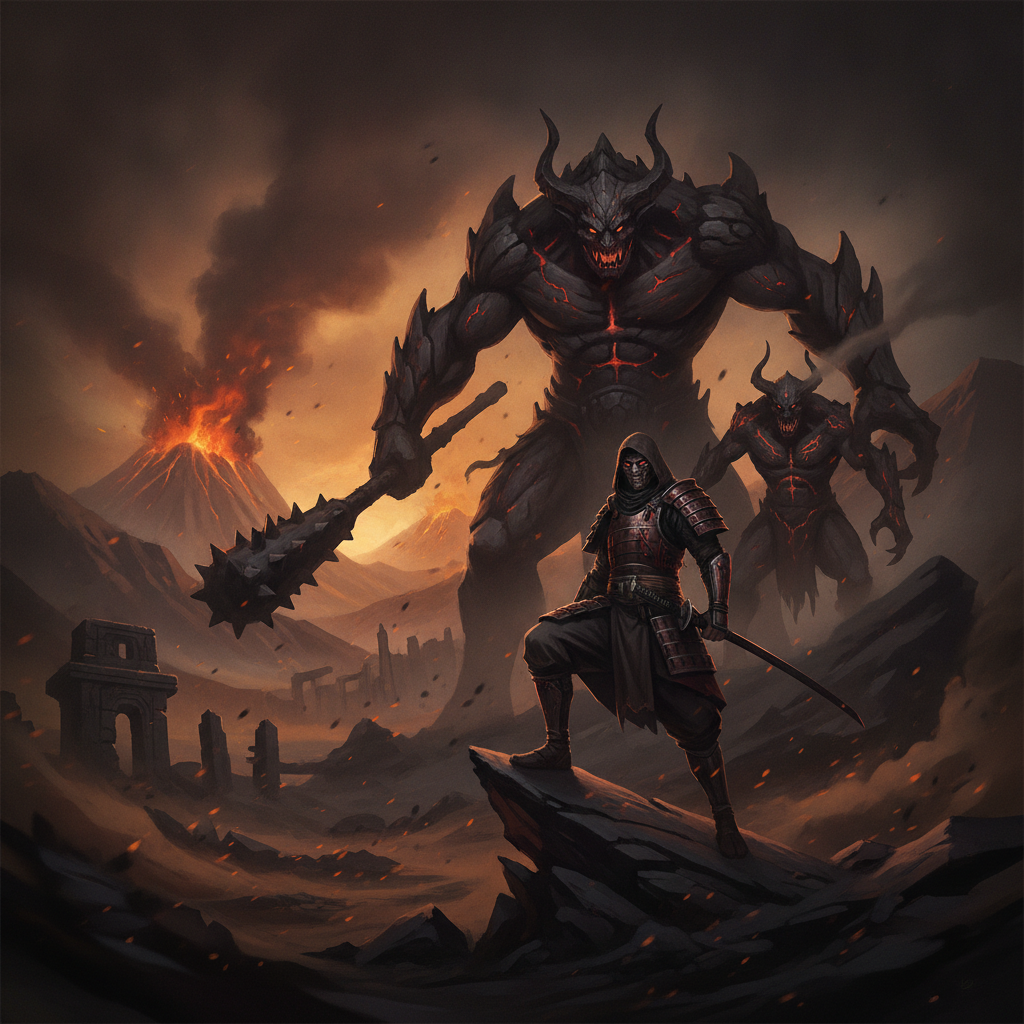
The empire is broken in everything except name. The old capital still claims authority over provinces it cannot reach. The clans run their valleys and their mines and their grudges. The roads are not safe. The yokai have come down from the mountains and are no longer the kind of thing the priests can ask politely to leave.
You enter Ashfall as no one. A penniless farmer with a notched blade. A second son fleeing a debt. A shinobi-trained orphan whose teacher is dead. The world will not lift you. The Ibuki Clan will not protect you unless you earn it. The Ascetics of the Kiso Peaks will not feed you unless you offer something they want. The Salt Road Caravan will cross your village whether or not you fight for it. The Scarred Brotherhood owes loyalty only to the Scarred Brotherhood.
Your blade matters here. Your name matters more. The yokai are the wildcard the rival clans cannot account for, and the clan that learns first how to negotiate with what comes down from the peaks is the clan that ends the era.
This is a martial-fantasy sandbox. The map breathes. The clans move on their own clocks. The yokai do not show up because you wanted them to.
// PLAY PROFILE
What this world plays like
Your first ten turns find you between Sekigahara Fields and the Owari Plain, deciding whether to take the road north toward Kiso or south toward the sea. The Salt Road Caravan will hire a swordhand. A shrine will offer shelter for a story. Your first kill will be remembered.
By turn fifty, you have a sword that has done work, a name a few villages know, and standing with at least two clans that disagree with each other. The Ascetics may have admitted you to the path. The Scarred Brotherhood may have noticed you in a way you cannot afford. A yokai you crossed in week three has not forgotten.
By turn one hundred, you are someone the clans speak about when you are not in the room. You may be a samurai the Ibuki cannot ignore. You may be a shadow-bound shinobi paid by three rival masters. You may be the farmer who sat down with a yokai at a fire and walked away. The map has shifted in your wake. The world remembers the village you saved and the one you did not.
Ashfall does not reset between sessions. Close the tab on Tuesday. The clans keep their wars without you.
// FACTIONS IN MOTION
Principal factions

The undisputed masters of the Owari Plain, the Ibuki Clan's power is built on a terrible secret: a Blood Pact with a powerful Oni. They rule from a fortress at the base of Mount Ibuki, hoarding the region's last untainted farmland and enforcing a brutal regime to gather the Nen required to sustain their pact. Their samurai exhibit unnatural strength, and their victories defy mortal explanation.

A reclusive order of yamabushi who inhabit the fog-shrouded Kiso Valley, practicing the dangerous art of Jujutsu to commune with the spirits of the dead. They seek to understand and soothe the corruption bleeding from Kakuriyo, viewing the daimyo's Blood Pacts as an abomination that accelerates the world's decay. They are keepers of ancient lore, including the true origin of the Weeping Soil.

A sprawling network of smugglers, merchants, and masterless rōnin who defy the warlords to traffic in untainted goods. Their armed caravans brave the haunted Sekigahara Fields to move precious salt, iron, and pure rice between domains, making them both vital lifelines and reviled war profiteers. They operate on a strict code of neutrality, serving any who can pay their exorbitant prices.
A desperate peasant rebellion forged in the blighted farmlands of the Sekigahara Fields. Composed of farmers driven mad by Weeping Grain and rōnin who have lost their masters, they fight a guerilla war against any and all authority. They have turned the 'Telling of Scars' into their founding principle, trusting only those who bear the marks of a hard, mortal life.
// SITES OF RECORD
Places that matter
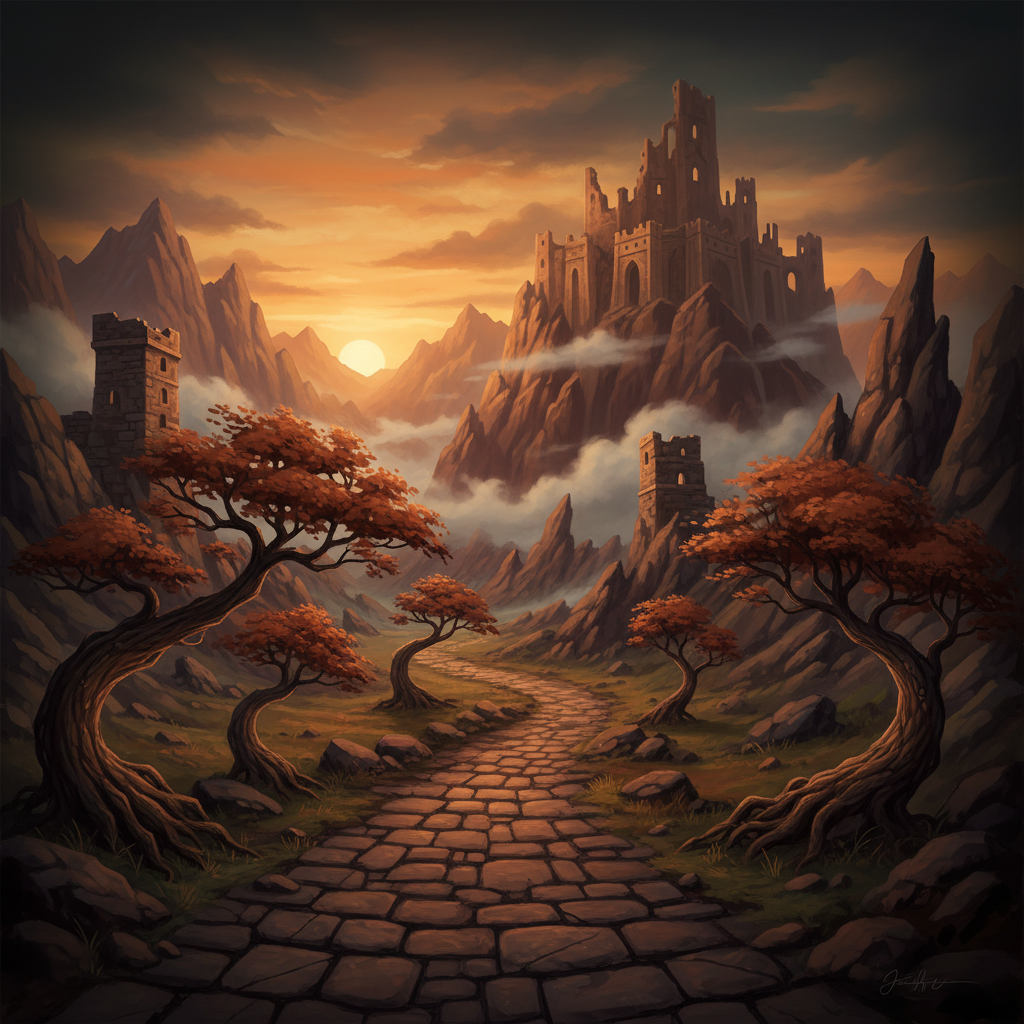
A windswept, ancient road, cracked and overgrown with sickly grass. Bare, twisted trees line the path, their leaves a permanent ash-grey. The air is still, save for the whisper of the wind, carrying distant, faint echoes that prick at the edges of your sanity. The sun hangs low, casting long, mournful shadows across the blighted landscape.
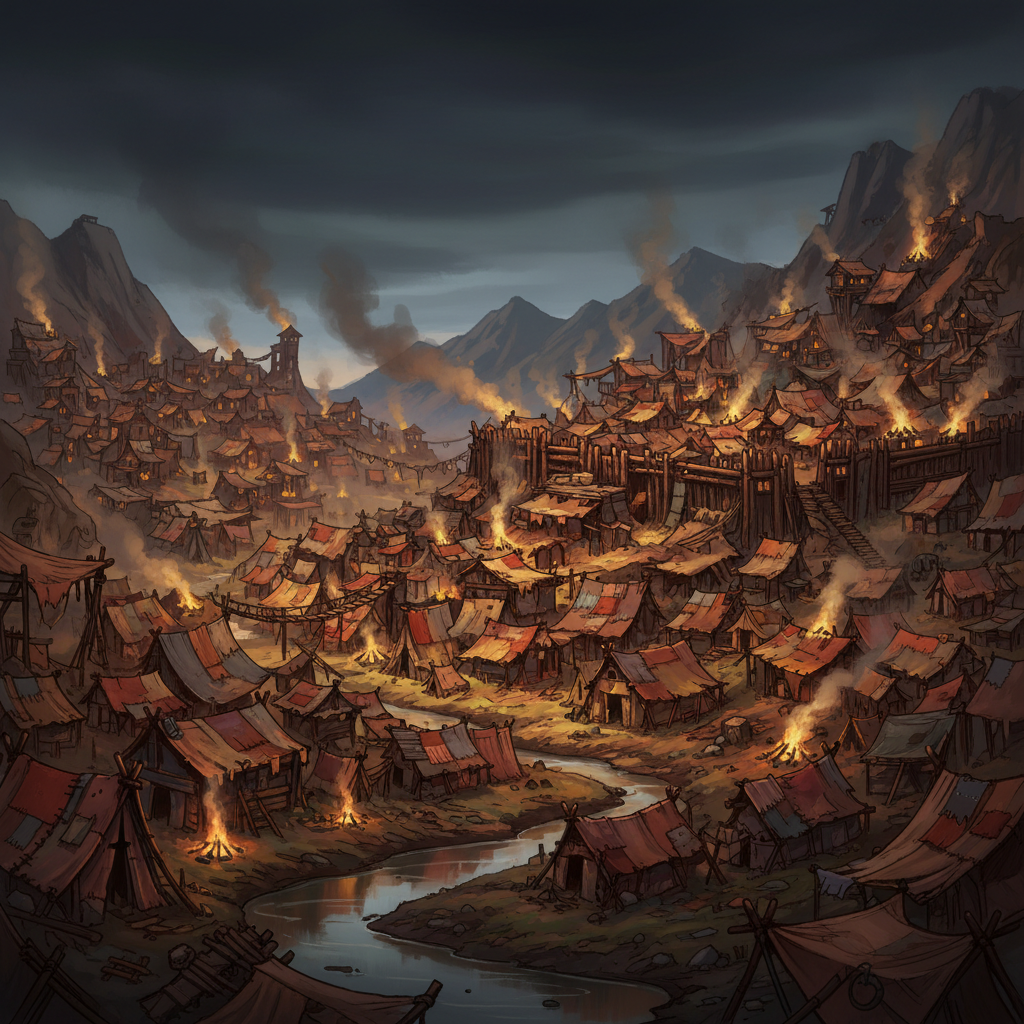
A makeshift market, guarded, scarce resources, no dedicated armorers. Survivors trade meager goods under the watchful eyes of Scarred Brotherhood warriors.
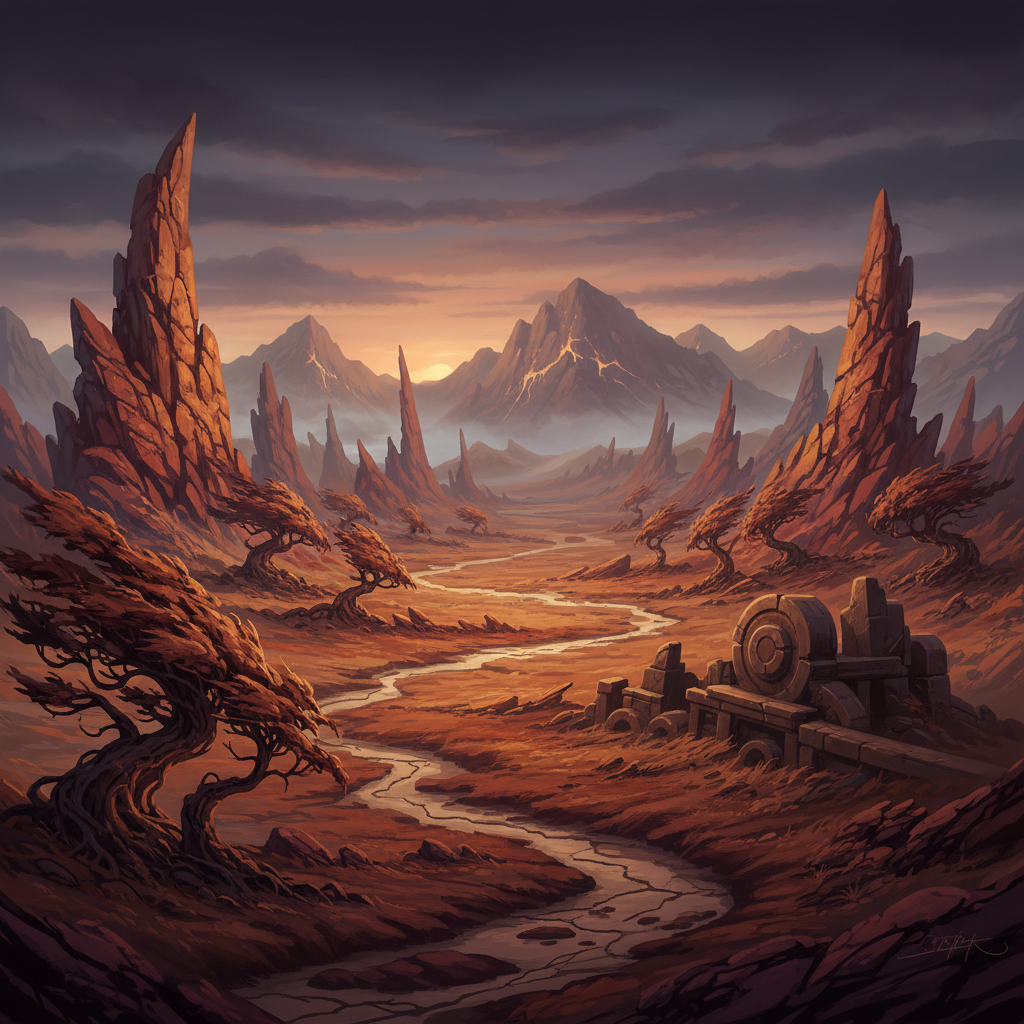
A vast, windswept plain of tall grass, forever stained by the memory of a colossal battle. The ground here is the most corrupted, weeping black oil that chokes streams and poisons the air with the smell of old blood and ash. The only structures are grave markers and the ruins of abandoned peasant huts.
A relatively fertile domain ruled from the imposing new castle at Kiyosu. The ambitious Lord Oda has brought brutal order, but his fields, though less blighted than others, produce a yield that seems unnaturally high. His ashigaru are famously disciplined and unnervingly fearless in battle.
A deep valley carved by the Kiso River, flanked by steep, densely forested mountains. The vital Nakasendō trade road winds through here, dotted with fortified logging villages and charcoal-burning camps. The air is clean, but the woods are deep, dark, and ancient.
A sacred mountain that looms over the plains, its peak often wreathed in unnatural fog. Once a center for monastic life, its temples are now silent ruins. The trees here grow with twisted branches, and the stones are slick with a cold, greasy dampness, even in high summer.
// LIVE TURN
A real turn from this world
The road through Kiso bends at a stone the locals do not name. You stop at the stone because the man you are riding with stopped at it.
He is older than your father. He says nothing. He sets his hand on the stone and waits a long count.
You wait with him. You do not ask. After a moment he removes his hand and rides on.
Your standing with the Ascetics of the Kiso Peaks shifts +1. You did not interrupt. The stone is recorded as known. Three villages further on, when you mention you came through the bend, an old woman will set a second cup of tea on the table without asking. The world remembers what you did not say.
// WHY IT HOLDS UP
Why The Ashfall Era holds up over a long run
The factions, characters, and places on this page are live state the world tracks, not prose written once and forgotten. What you do changes them: what you own, who owes you, who has forgiven you and who has not.
Supported state persists between sessions. Leave for a week and the scene holds; come back and catch-up can resolve relevant elapsed changes. An established promise can remain available for a later consequence, though the Narrator may still phrase a smaller detail loosely.
FREE TO START · QUICK-START OR AUTHOR YOUR OWN CHARACTER NEXT