The premise
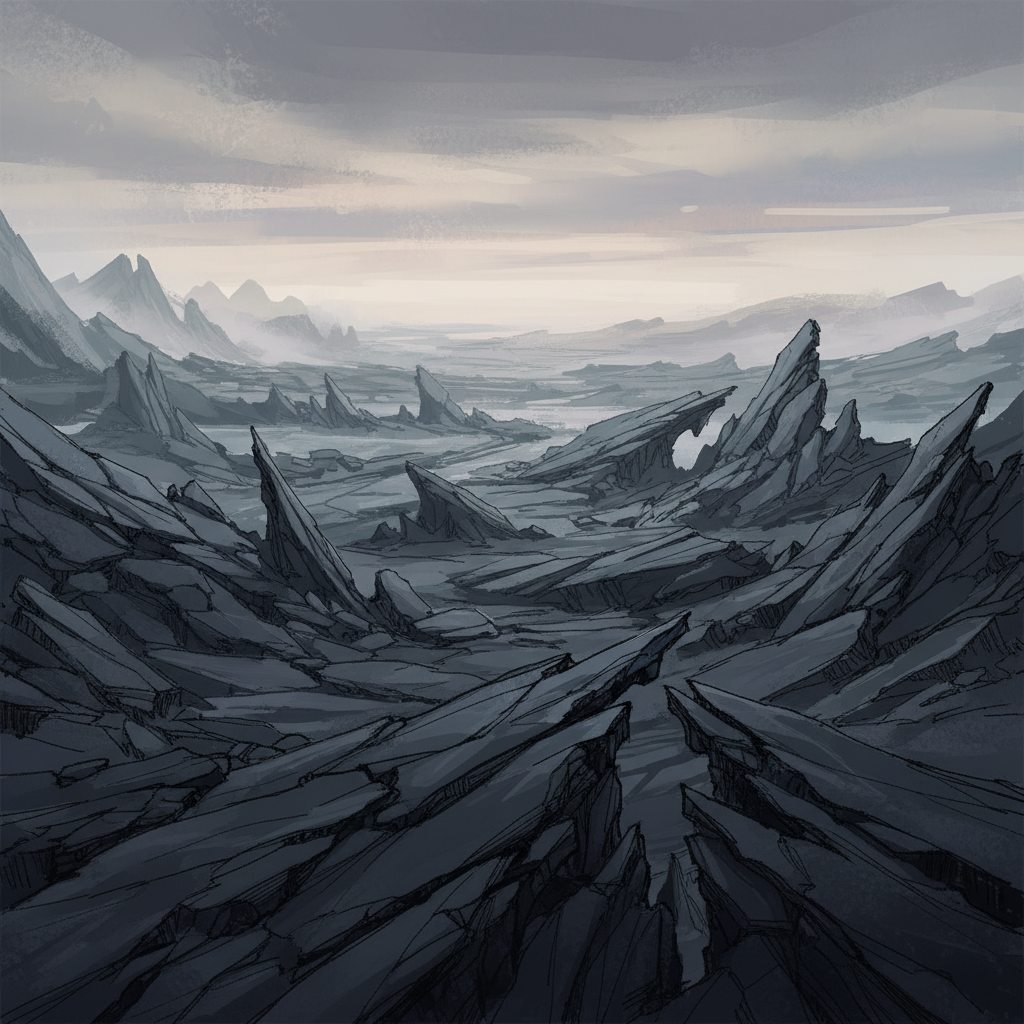
The fishing trawler Dunblayne went over in a December squall and the current carried you to a rocky islet so remote that the chart in the wheelhouse had not named it. Twelve square kilometres of slate cliff and peat moor, no trees, no humans, no shelter that was not built by someone two hundred years ago and abandoned.
The wind does not stop. The seabirds nest in their thousands on the south cliffs. The skies are silver for ten hours a day in winter and bright for sixteen in summer, and the sea is never warm. The Shieling Homestead, three stone walls and a roof that needs work, is the difference between you living and not living. The South Cliff Colony of fulmars and gannets is the difference between you eating and not eating.
You arrive into a place that does not know you are here. The seabirds you will name. Old One-Eye is the gannet that has the south outcrop and will not yield it. Whisperwing keeps the high moor. Fiona is the cat the trawler carried and who came ashore with you, because of course she did.
This is a survival sandbox. The wind does not stop. The world keeps the calendar in storms.
What this world plays like
Your first ten turns are the Shieling. You will repair the roof. You will discover the seep. You will identify which birds you can take and which you must not. You will name Fiona aloud, which is its own kind of decision.
By turn fifty, you have a roof that holds, a peat fire that lasts, a small cache of dried fulmar, and a route up to the South Cliffs that does not kill you. The High Moor Scavengers, which are the gulls who will eat anything you leave, have decided whether to harass you or follow you. Old One-Eye has either yielded the south outcrop or driven you off. Standing with the islet's ecosystem exists as a real number.
By turn one hundred, you have mapped the islet. The Tanglewood, which is not a wood but a low scrub of weathered juniper on the east face, gives you fuel and shelter that the Shieling does not. You have either signalled a ship or decided not to. Fiona has had a litter, or she has not. The world remembers each storm you survived and what you did between them.
The islet does not reset between sessions. Close the tab on Tuesday. The wind does not.
Factions in motion
The Shieling Homestead
The solitary project of the human survivor to create a sustainable, ordered life on the islet. This 'faction' is focused on the daily tasks of survival: maintaining the peat fire, foraging for food, improving the shelter, and crafting tools. Its core goal is to maintain the line between being a thinking human and a desperate animal.
The South Cliff Colony
A bustling, seasonal metropolis of tens of thousands of auks, primarily puffins and razorbills. Their existence is governed by the cycles of mating, nesting, and fledging. They are the islet's primary source of seasonal protein, and their arrival marks the end of winter's famine.
The High Moor Scavengers
A loose, year-round confederation of herring gulls and kittiwakes that dominate the islet's open spaces. They are intelligent, opportunistic, and adaptable, living by scavenging the shorelines and preying on the eggs and chicks of other birds. Their constant presence is both a nuisance and a resource.
The North Face Conclave
An aloof and inaccessible society of gannets who nest on the sheerest, most exposed cliffs. They are masters of the air and sea, largely removed from the daily squabbles of the lower cliffs. Their movements are grand and seasonal, serving as a living calendar for the islet's other inhabitants.
People you'll meet
Fiona
Old One-Eye
Whisperwing
The Silent Perch
Moss-Beak
Driftwood Weaver
Places that matter
The High Moor
A rolling expanse of peat bog and tough grasses covering the island's interior. Dotted with dark, tea-colored freshwater pools, it is exposed to the full force of the wind. The old shieling sits on its highest ground, a lonely stone sentinel.
The South Cliffs
A sheer wall of slate dropping to a churning sea, riddled with ledges and crevices. In season, it is a chaotic, deafeningly loud metropolis of tens of thousands of nesting puffins, gulls, and gannets.
The Tanglewood
A dense, low-lying thicket of wind-stunted, salt-blasted shrubs and gorse on the island's more sheltered eastern side. The ground is a swampy morass, making passage difficult and treacherous. It is a quiet, claustrophobic place.
The North Face
The windward side of the island, a series of bare, rocky tors and steep, gravelly slopes. It bears the full brunt of the Atlantic gales, making it nearly barren of life. The highest point of the islet offers a commanding, if bleak, view of the empty sea.
A real turn from this world
Fiona comes back in with a fulmar chick and sets it on the threshold like a tribute. You did not ask her to. She did it anyway.
You take the chick. You give her the head, which she wanted. You set the rest aside for the smoking rack. She watches you do it. She is not yet a domesticated cat in any sense that means anything, and she is not a wild cat either. She is a cat who has decided to live with you.
Larder: +1 fulmar (Fiona, gift). Standing with Fiona: +2. The Shieling roof: stable. The world records that on day forty-seven of being lost on the islet, the cat decided you were the partner.
Why The Faroes-Lost holds up over a long campaign
Most AI roleplay tools are built around a single session. They start to fall apart at hour ten and are barely playable at hour fifty. The Faroes-Lost doesn't, because the world isn't living in a chat history - it's living in a database.
Mechanical truth in Postgres. Coins, inventory, NPCs, factions, locations, properties - all in real database rows. The narrator describes around the database; the database is what's true. By turn 500, your business ledger still balances and your apprentices still have the names you gave them.
Hierarchical chapter compression. Every chapter compresses into a tight summary; summaries compress into act-level summaries. The hundredth turn can pull a relevant detail from chapter two without flooding the context window.
Semantic memory. Important moments are embedded as vectors. When the current scene references an old promise, the engine retrieves the exact exchange where that promise was made - even 800 turns ago.
You'll be asked to choose Quick Start or build a character of your own.