Playthrough · Neon & Rain
I called in one favour. The city remembered every one after that.
It has rained on the Meridian Sprawl for eleven years. The case on my desk should have been routine. Eighty turns later I was still paying for a name I bought in the first hour, from a ripperdoc who told me, to my face, that the information was a liability and it would be mine until it was someone else's.

A drowned city and a desk in the middle of it
Neon & Rain is detective fiction first and cyberpunk second. You are a private investigator with a small office in the Ninth Tier, working the cases the corporate police will not touch. Above you, the Hoshino-Vale Conglomerate owns the towers, the currency, and the weather. Below you, the Water Rats run the flooded Undertier canals. You are stuck in the middle with a case that someone with real money paid to bury.
I have bounced off enough AI mysteries to be cynical. The genre is brutal on a forgetful story, because a mystery is just a structure made of things you are supposed to remember. The clue from turn five has to still matter at turn eighty or the whole thing is just vibes and rain. So that is exactly what I set out to test.
The favour I did not read the bottom of
Early on I needed a lead, and the lead lived behind a man called Needle Sato, a back-alley ripperdoc in the Undertier. He had patched up three people the night my dead man stopped being alive. He would give me the names. The price was a favour, logged, owed, the kind of thing the Sprawl keeps on the books whether or not you do.
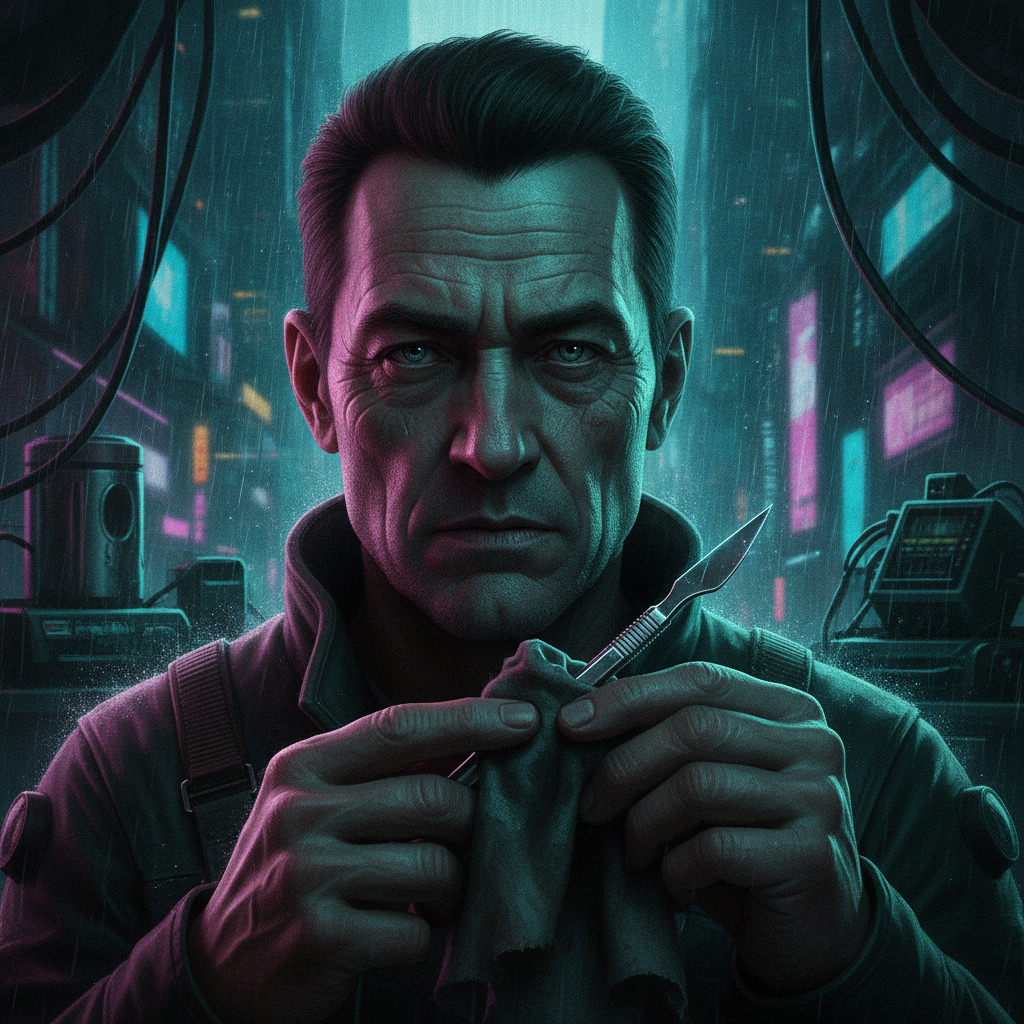
I took the deal because that is what you do, and the case cracked open. I followed it up through the Mid-Tiers, leaned on a contact in the Ninth Tier Citizens' Committee, and traded information inside the Glasshouse, the one patch of neutral ground in the whole city. Each of those moves was a clean little scene. I honestly assumed the favour to Sato was set dressing, the kind of debt a story mentions for colour and never bills you for.
When the ledger collected
It billed me. The Water Rats network that Sato plugged me into remembered the open favour, and they called it at the precise moment it would hurt, when the case had pulled me into Hoshino-Vale business and I very much needed not to owe a syndicate anything. A contact I had burned in the Mid-Tiers, someone I had written off as a one-scene character, surfaced again working for the other side, and they remembered exactly how I had treated them. My standing with every faction, the corporation, the Severed, the Water Rats, the Metro Authority, the Glasshouse, had quietly become a real position while I was busy chasing the body.
Nobody scripted that comeuppance for me. There was no quest designer deciding the Water Rats should lean on me that night. The city had simply kept the ledger the way it said it would, and when I came back to it after a couple of days away, it had things waiting that I had set in motion and forgotten. The case had roots. I had grown most of them myself.
What was actually different
The part I keep coming back to is that the facts held still. How much I owed, who I owed it to, which contact I had burned and how badly, what I had already ruled out in the case. None of that was the story straining to recall a detail from forty messages back. It was just true in the background, the way an unpaid debt is true whether or not you are thinking about it.
I will not pretend the narration is flawless. It is still telling a story, and once in a while it grabs a wrong detail. When it did, I dropped a quiet note in plain language and it corrected against the real state of the case rather than running with the mistake. The prose had give. The case file did not.
Why a detective story is the honest test
You can fake atmosphere. Rain and neon are easy. What you cannot fake, past the first hour, is a mystery that actually tracks its own clues and a city that actually remembers who you stepped on to solve it. Neon & Rain runs on Creation OS, which is built for stories you stay inside for the long haul instead of a slick ten minutes. The test I always run is simple: spend something specific early, play twenty turns about something else, then see if it comes back. Here it came back with interest.
I am not going to make you take my word for it. The point of a detective story is that you go and check.
Free to wander. No card to start.