// THE PREMISE
What this world is
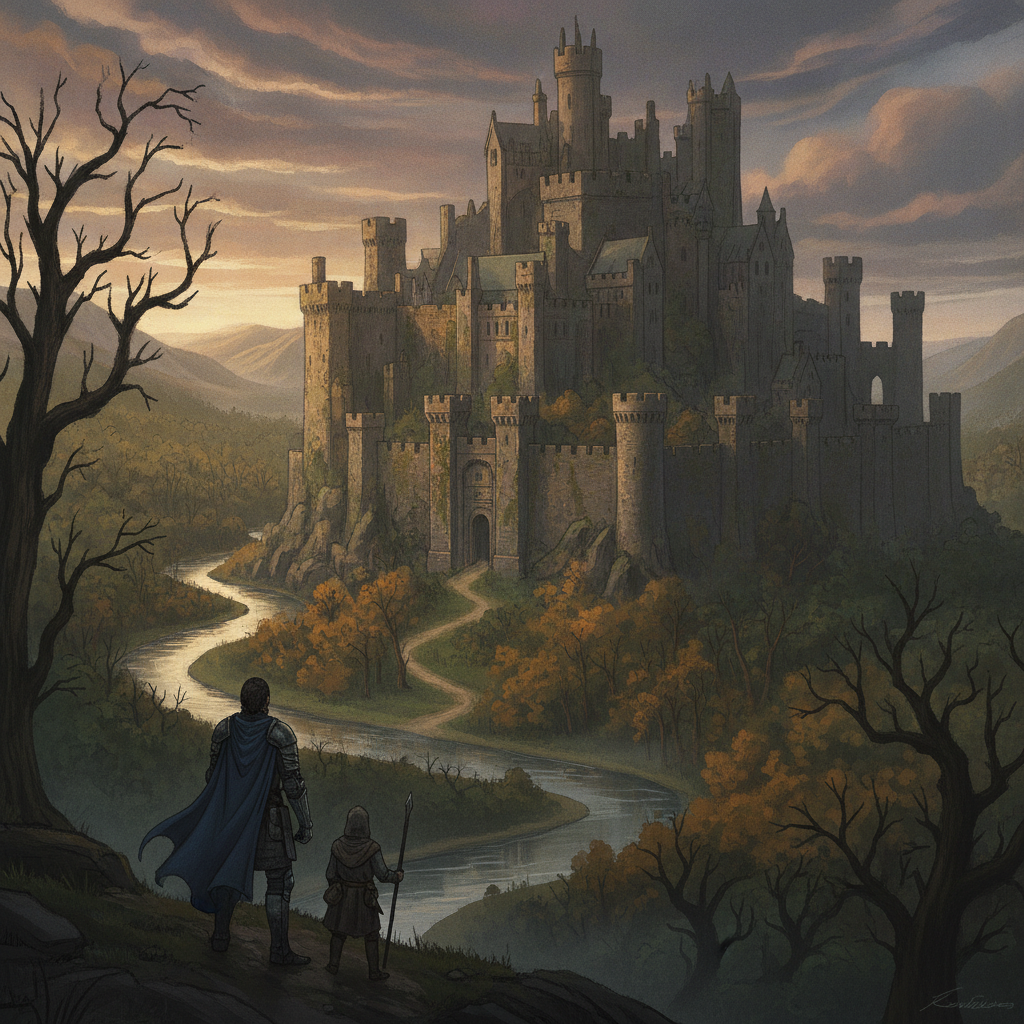
Ashford Manor is a great rambling estate on the windswept English moors, and in the autumn of 1924 its master is dead. Lord Edmund Ashford was found at the foot of the library stairs the morning after a dinner that gathered his fractured family, his creditors, and his secrets under one roof. The coroner is content to call it a fall. You are not. Whether a private inquiry agent summoned by a frightened relative or a detective the family did not want, you arrive into a house where everyone has a motive, an alibi, and something to hide - and before the inquiry is half done, there will be a second body.
This is detective fiction first: observation, interrogation, timelines, and the slow narrowing of a circle of suspects. Mr. Alistair Crane, the industrialist whose Crane money is buying the influence the gentry can no longer afford, arrived with a contract unsigned. Dr. Imogen Shaw, physician and botanist, keeps a black bag and knows what was in the dead man's glass. Reverend Silas Croft of Lower Ashford knows which sins the family confessed. The Veil Society holds séances for the war's dead, and the Black Hart Regulars - working men and traumatised veterans - know the old scandal the Ashfords buried. Detective Inspector Alaric Finch of the county constabulary resents your presence and races you to the easy answer.
The will is missing or forged, an old death the family called an accident was nothing of the kind, and every alibi rests on someone else's lie. You must move through suspicion and grief and polite hostility, survive a second killing meant to end the inquiry, and name the murderer before the murderer names you.
// PLAY PROFILE
What this world plays like
Begin in the library where Lord Ashford fell. Examine the stairs, question the dinner guests, and compare what the family says with what the servants saw. Inspector Finch would prefer a quick conclusion. You can give him one, or keep asking.
Follow a discrepancy in Dr. Shaw's account, a missing will, or the old scandal known at the Black Hart. Approach the Ashfords gently, put pressure on Crane Industries, or seek the Veil Society's version of the night. Each approach risks closing another door.
Build a case you can defend while deciding whom to protect. The threat of another killing makes patience costly, but an accusation made too early may serve the murderer. Choose when you have enough to confront a suspect, and who should be in the room when you do.
// FACTIONS IN MOTION
Principal factions
The de facto ruling family of the valley, representing the old landed gentry. Their goals are to maintain the rigid social order, preserve their dwindling family fortune against the encroachments of the modern world, and above all, protect the family name from scandal.
The embodiment of new industrial wealth, seeking to buy the influence the gentry can no longer afford. Mr. Crane plans to exploit the region's resources, viewing local traditions and the authority of the Ashfords as obstacles to be overcome through the ruthless application of capital.
A tight-knit smuggling ring operating out of the coastal fens, dealing in untaxed French brandy, tobacco, and other illicit goods. They are a pragmatic, secretive group of locals who see themselves as businessmen providing a service, not criminals, and will use violence to protect their routes.
The official arm of the law, based in the market town and seen as outsiders by the valley's inhabitants. They are hampered by primitive forensics, slow communication, and a justice system that heavily favors the gentry, forcing them to navigate a web of influence and silence to solve any serious crime.
A secret spiritualist circle composed of those grieving the dead of the Great War, from ladies of the manor to scullery maids. They conduct séances to contact the other side, a practice condemned by the Church. Their search for solace makes them unwitting keepers of dangerous secrets whispered by the 'dead'.
An informal brotherhood of working-class men, primarily traumatized veterans of the Great War, who find solidarity in the local pub. They are bound by shared hardship and a deep-seated resentment of the class system they fought and bled for, representing a dormant threat of social unrest should their livelihoods be threatened.
// KEY FIGURES
People you'll meet
// SITES OF RECORD
Places that matter
The largest and oldest forest in the region, a dense canopy of ancient oak and yew that sunlight struggles to pierce. The ground is a thick carpet of moss and fallen leaves, muffling all sound. It is considered the wildest part of the moors.
A stretch of open grassland and coastal heath that serves as the main route to the county town of Greystone. The road is better maintained here, and the land is dotted with sheep farms and the occasional lonely vicarage.
A rugged coastline of high cliffs broken by small, hidden coves and a single fishing port, Port Fenwick. The village itself is a tangle of narrow streets smelling of salt, tar, and fish, huddled around a stone quay.
A rolling landscape of ancient forests and manicured grasslands, dominated by the imposing silhouette of Ashford Manor on a low hill. Below it, nestled in a combe, lies the village of Lower Ashford, a tight cluster of stone cottages, a Norman church, and the Black Hart public house.
A low-lying expanse of misty marshland and waterlogged pastures, criss-crossed by sluggish streams. The air is heavy with the smell of damp earth and decay. Isolated shepherds' huts and crumbling stone walls are the only signs of civilization.
// STORY PASSAGE
A passage from the published profile
Inspector Finch sets his teacup down with great care. "It was a fall," he says. "The coroner says a fall. You go poking at the family and all you'll do is make an enemy of people who can ruin you, and find nothing, because there is nothing."
He does not quite meet your eye when he says the last part. He knows about the stairs. He knows they are not steep enough.
Selected story passage. Your choices can lead elsewhere.
BEFORE YOU ENTER
Choose a first decision
Start with a person you want to meet, a place you want to see, or a problem you want to understand. You make choices through written actions and read the Narrator's response. The people and places above introduce this world; they do not promise a fixed sequence of scenes.
Completed turns save to your account. Review the latest scene and the relevant in-game information when returning. Check current access and Spark allowances before a longer session, and use the player guide for help with saves, artwork, possessions, and other supported features.
Profile updated .
CHECK ACCESS AND SPARK COSTS · CHOOSE A CHARACTER BEFORE PLAY